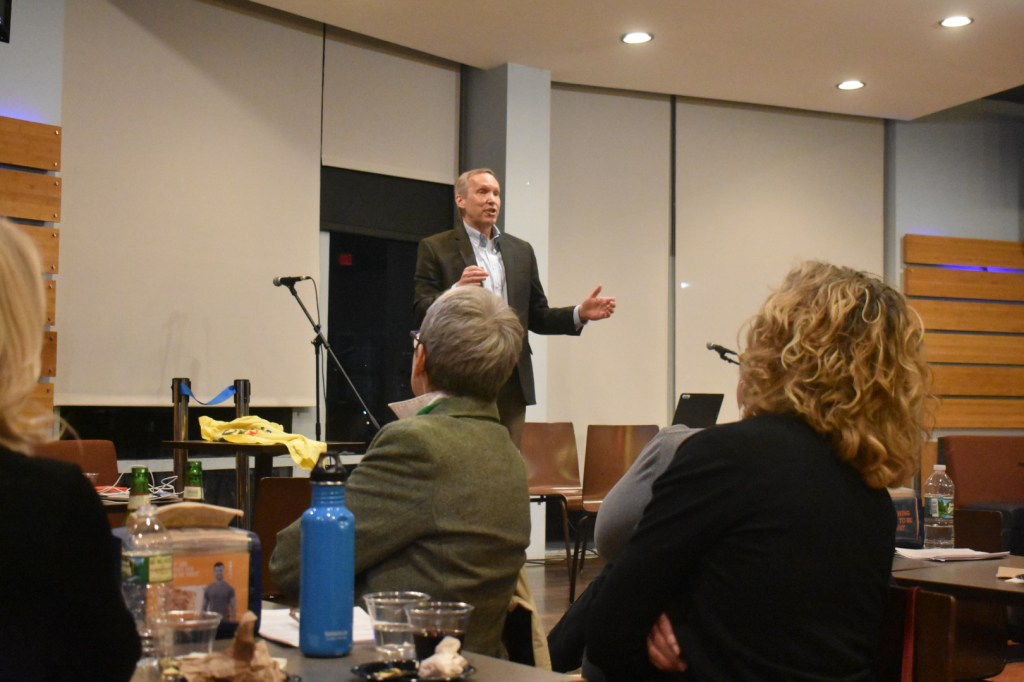
What role does performance have in pedagogy?
Is it the instructor’s performance, the students’ performance, or both? How can one intentionally plan instruction to increase active performance in the classroom?
What is it?
With a goal of increasing students’ active learning, we consider the Pecha Kucha presentation format that allows the presenter only 20 slides (visuals only), and each slide advancing automatically after 20 seconds. It was born from a need for creative people to share ideas more efficiently.
A Pecha Kucha presentation can be about anything; check out these examples:
You can do it.
“Working with the restrictions imposed by the Pecha Kucha format was extremely challenging. People like to use the expression, “Think outside the box,” but trying to be creative within the confines of the box requires far more discipline and original thinking. Selecting what was most important about my topic and making it relevant without the advantage of long-winded explanations and lots of allusions to research and scholarship was daunting. But I am so glad I took up the challenge.” Dean of Assessment
Why do this?
Student performance in a course might traditionally mean how the students fare on summative papers and tests. To foster a more active learning environment, we can expand our approach to “student performance” and demand smaller, on-the-spot learning performances – ones where the student may struggle a bit, but everyone is learning from the experience.
How do we add this?
The most immersive experience is hosting a full Pecha Kucha event, but there are simple ways to modify the concept to fit different time allotments. Presentations can be recorded and even discussed outside of class using media tools.
Even simpler, each week, the instructor chooses five images. These images may come from a reading assignment or be charts or graphs everyone is responsible for understanding. All students understand that they will be responsible for standing up in class and saying something brief about each of those images. (See also: On the Spot)
It’s scary, but it’s fun.

The process is a creative one, both in your message and your delivery. Pecha Kucha forces the presenter to prioritize the core message and invites them into story-building process that most presentations don’t. The result is a unique collective learning experience for everyone.
Testimonials
It had taken me many years to get the teach/engage recipe how I liked it, but my [Pecha Kucha] experience left me considering new options; those four hundred seconds can be a very effective delivery method. It is now in my fall course, only not for me; my students will be getting their introduction to Pecha Kucha, only this time the timer will be in my hand.
Professor of Criminal Justice
This style presentation is challenging but effective because you really have to master your content and your message. I introduced a modified version to my students’ presentations to great success.
Professor of Business
 TeacherTeacher