Learning about learning
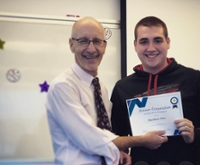
Rick Fenner
How an instructor spends the first day of class can have a lasting impact on student learning. To welcome students to Personal Finance, Rick decided to throw a retirement party on Day 1 – not for himself, but for his students, where they walked into the classroom and were told, “Congratulations on your retirement!”
Students were asked to imagine themselves on the day of their retirement from Fenner Corporation and required to brainstorm how old they think they are, what path their career followed to get here, and most importantly – what are they doing “tomorrow”?
Fostering financial literacy starts with creating an awareness of what role financial decisions play in an individual’s path through life. Starting at the abstract end of this path makes a strong case for the importance of each step along the way, which is precisely where the students and the instructor need to go this semester.
How do we invite students into an authentic learning experience?

Megen HemstroughT
Bringing future teachers up through their undergraduate studies requires a complex degree of synthesis once the intro courses are complete. How does an instructor help their students “put it all together”?
In Megen’s curriculum and assessment course, students start the semester with a surprise challenge: chess. They learn it and then figure out how to teach it, but they are not told “why” – that is left for them to discover. This immersive experience is purposely designed as a unique metaphor for the moving parts of learning design and evaluation: essential questions, vocabulary acquisition, formative assessment, hands-on learning, and collaborative practice. It brings every student into the class into a baseline learning experience to then dissect for meaning.
One student reflected that “this experience was definitely different and I really liked it. It was ‘here are different parts to a puzzle and you need to figure out the deeper meaning’.”
Why play when we have to learn?

Robert Miller
Robert has taught online for a number of semesters, but found himself teaching face-to-face for the first time last semester. Given a syllabus, some objectives, and the class meeting times, he soon realized that this was less a job but a journey – for both him and his students.
He spent the semester trying a variety of techniques to move his students’ skill levels closer and closer to the course objective of viewing sports through the critical lens of legal issues. He experienced the inevitable ups and downs of classroom teaching where attempts at making an impact were at times a miss, but increasingly – through trial and error, intentional design, and calculated risk – a hit.
On his last day of class he decided to share a poem that manifested the journey he and his students were on. A senior waited after class to individually thank him for sharing the poem and the journey, noting it a perfect end to his college experience.
What risks are worth taking in teaching?

Mary siniscarco
Oftentimes, college courses are dominated by what the instructor has to say and efforts to get the students talking are, well, an effort. Mary implemented a simple change in one of her classes called On the Spot, where students know they will be expected to stand up and speak on any number of topics every class meeting.
From Mary: The “On the Spot” teaching strategy not only provided my students with an appropriate level of challenge but also increased their confidence in public speaking. So many students admittedly struggle with social anxiety and the On the Spot technique allows students to become an “authority” on a particular topic which diminishes their fears and increases their confidence. At first, students were somewhat terrified to be literally put “On the Spot”. However, their level of intellectual and social growth was simply amazing.
When do we elevate the learner’s authority?

Ari Gratch
In teaching public speaking, Ari recognizes his role in building a skill that realistically terrifies most people. Rather than attempting to allay the fear factor of giving a speech, Ari implemented a simple mindfulness trick to strengthen the student’s ability to work through the emotion.
When giving a practice speech in his course, students were asked to pause periodically mid-speech and say nothing for a matter of (uncomfortable) moments. In those moments, the silence created a sort of speed bump to self-awareness in the process of giving the speech, rather than in getting the speech over with.
Over 90% of the students surveyed (65 responding) found the technique – while not particularly comfortable – useful.
What role can mindfulness have in instruction?

Kermit the frog
An adjunct professor recently confessed that, even after multiple semesters of teaching, he still feels “green”. And if we’re to listen to Kermit the Frog, we might agree it’s not easy being green.
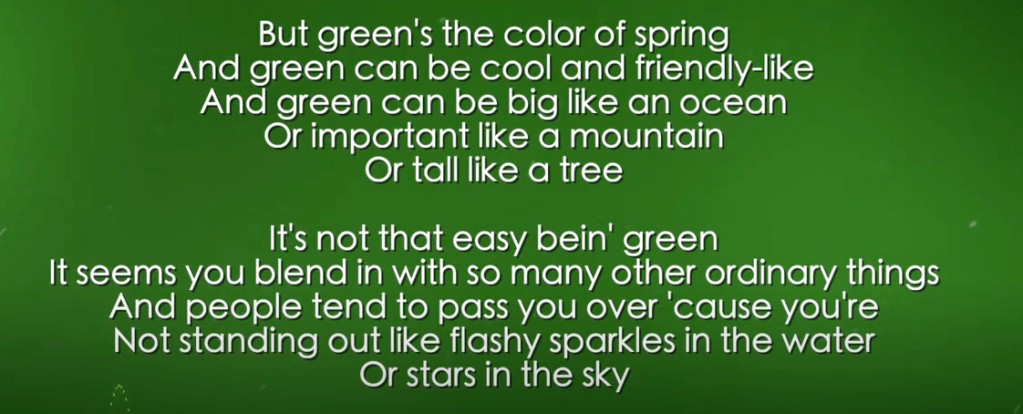
An instructor often feels the need to be the sage on the stage. But when the world’s information is a few thumb taps away in all of our pockets, the nature of teaching shifts from providing information to fostering our students’ ability to gather, prioritize, process, and apply course information in the many ways of the new, media-rich world. So, it’s not easy, but it’s important to stay a little green. That’s what learning looks like.
Is learning about learning ever finished?
 TeacherTeacher